Revisiting the St. Valentine’s Day Massacre
By Jack Biemer
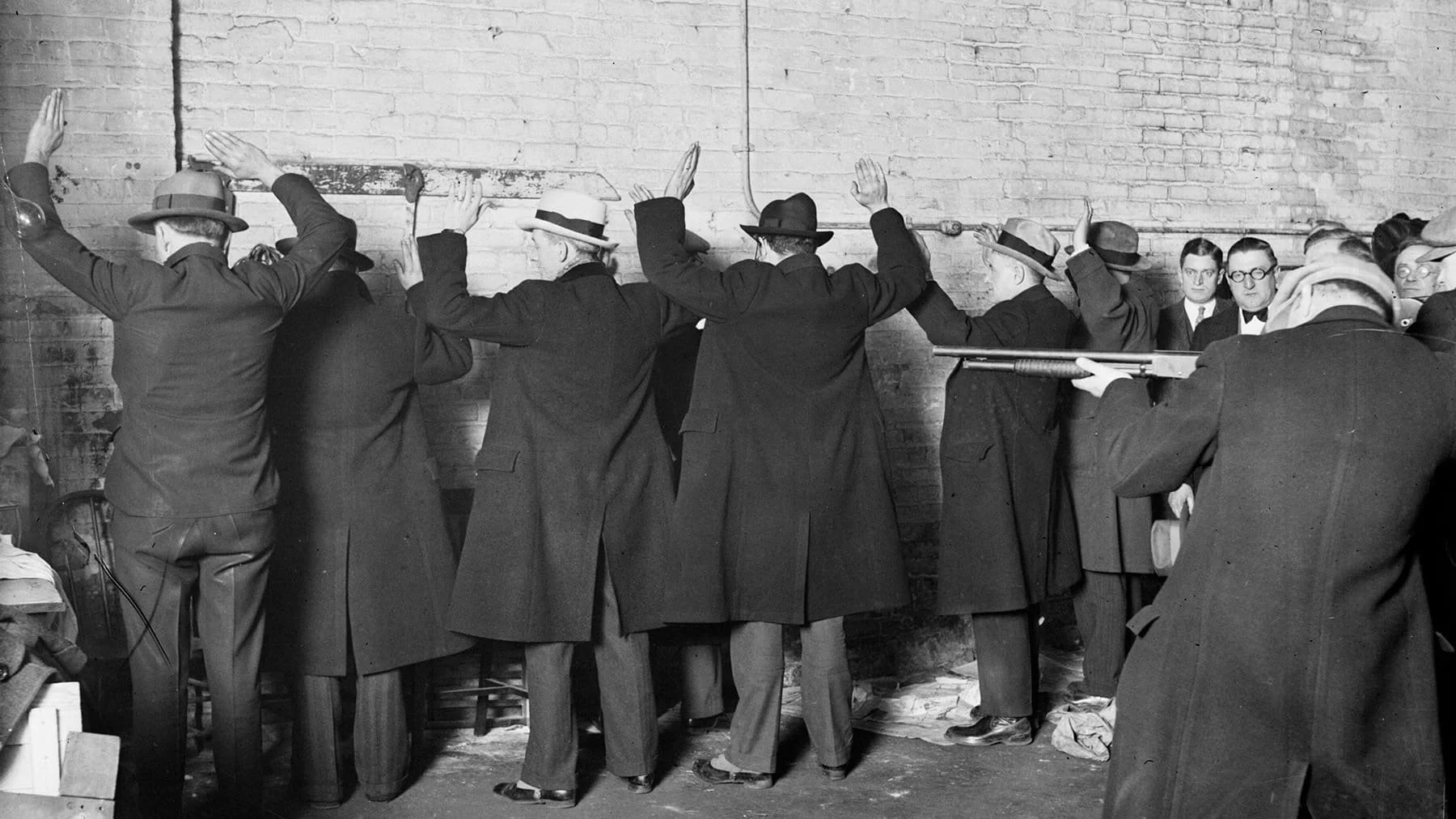
Since the 1840s, February 14th has been celebrated in the United States through commemorative cards and romantic gestures as part of a holiday honoring love, ostensibly on the behalf of St. Valentine. However, Valentine’s Day also marks one of the most infamous and brutal massacres in American criminal history, as well as the beginning of the end for the gangster era.
The story of the Saint Valentine’s Day Massacre begins, as much of modern criminal history in America does, with Prohibition and the massive profits reaped by gangsters and bootleggers from the illegal sale of alcohol. Among those who thrived in this era of corruption and chaos there is one name that rings out through the ages: Al Capone. Alphonse Capone was born in New York to a poor Neapolitan immigrant family. With most legal opportunities closed off to him due this background, he turned to crime at a young age, joining a social club, i.e. the mob, at the age of fourteen and working as a bagman and low level enforcer. In 1920, he traveled to Chicago and slowly worked up the ranks, eventually moving to the suburb of Cicero and taking it over through the tactics that soon became his signature: the support of local politicians, purchase of public goodwill, and the calculated use of violence. Capone worked his way up to being the leader of the Chicago Outfit in January of 1925, soon becoming known for both his generosity and penchant for brutality. Of 700 gangland murders over the period of 1920-1930, Al Capone was responsible for over 200. In response to any criminal allegations, Capone would always complain that newspapers blamed him for everything except the Chicago Fire. By 1930, Capone had an empire of 6000 speakeasies and made 100 million dollars a year, or 1.4 billion today.
Al Capone’s power made him an extremely influential figure within the city of Chicago, giving him the ability to act with impunity from local police and even elect mayors, but it also made him many enemies. Capone’s South Side-based Chicago Outfit had been feuding with North Side gangs for many years by 1927. The feud had begun with the Chicago Outfit’s 1924 killing of major North Side leader Dean O’Banion who had double-crossed and snitched on Capone’s boss in a business deal for a brewery. By the spring of 1927, George “Bugs” Moran had taken over the North Side and led his forces against Capone. After multiple attempts at peace broke down, a new war erupted in November 1927 with an attempt on Capone’s life. Capone responded with a concentrated campaign of terror across Chicago, which prompted an equally brutal response from Moran. After a long war, there had been attempts to broker a peace but these were squashed by allies of Moran, who killed major Capone allies under a flag of truce. While these actions were going on however, Capone was planning his response: a decapitation strike, aimed at Moran himself.
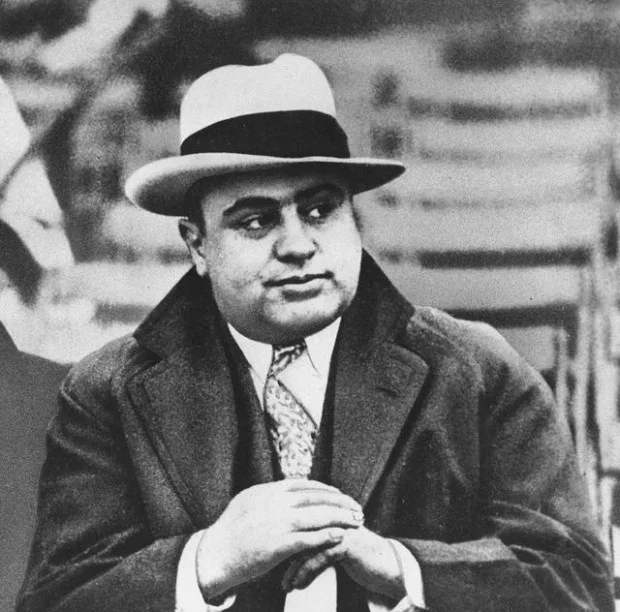
Al Capone
On February 14, 1929, Capone’s plan went into effect. On that day, a group of North Side gang members were meeting in a garage at 2122 N. Clark Street. Present at this garage were some of the top killers and major operatives, including Peter and Frank Gusenberg, James Clark, Adam Heyer, Albert Weinshank, John May, and Reinhardt Schwimmer. At the time, it was believed that Bugs Moran would be there himself as well. A police car drove up to the garage, prompting Moran, who had arrived late, to flee the scene. But though the four men in the car were dressed as police officers, they were actually out-of-towner hitmen who opened fire using submachine guns and a revolver, pumping 90 bullets into the North Side Gang and killing or mortally wounding them all. When the real police arrived at the scene, they found a dying Frank Gusenberg, who, in the criminal tradition of silence towards police officers, stated, “I refuse to talk,” although there is no evidence that he actually uttered the words, “Nobody shot me” as in the legend.
Although many other theories have been promoted about the massacre, the evidence suggests that Moran’s statement soon after the massacre, “Only Al Capone kills like that” is still the most likely outcome, despite his vacation in Florida at the time.
The massacre was the beginning of the end for the North Side Gang. Although a peace was soon agreed to in May of 1929 that pooled the resources of both sides, the horror of the massacre caused a massive public outcry against crime and bootlegging. The Chicago Association of Commerce offered 50,000 dollars for the arrest of the killers, and concerned citizens groups such as the Secret Six, made up of 6 of the most prominent Chicago businessmen, were formed for the purpose of getting justice. The massacre also triggered a response by political authorities such as President Herbert Hoover and Director of the Bureau of Investigation, the precursor to the FBI, J. Edgar Hoover, who redoubled their efforts to “get Capone” by using the Treasury Department’s investigation of his tax records and the so-called Untouchables, special agents sent to enforce prohibition led by Eliot Ness and so named for their incorruptibility. Eventually, the Untouchables famously caught Capone and sent him to Alcatraz on a conviction for tax evasion. Moran also died in prison in 1957. Another less well-known impact of the St. Valentine’s Day Massacre is the influence it had on gun control. The public outrage of the St. Valentine’s Day Massacre motivated Congress to pass the National Firearms Act of 1934, which put heavy taxes on machine guns and guns with barrels less than 18 inches, and set up a registration system for those firearms.
The massacre also captured the enduring imagination of the public. It has appeared in numerous movies and television shows, beginning with the classic 1932 film Scarface, which depicts a character clearly inspired by Capone ordering a massacre clearly based on the Saint Valentine’s Day Massacre. By 1959, Prohibition had ended, tensions had cooled and the massacre had entered into the realm of urban legend. That year, George Raft played a parody of his character in Scarface who orchestrates another St Valentine’s Day Massacre, only to be thwarted by two crossdressing musicians and a young Marilyn Monroe in Some Like It Hot. Eight years later, Roger Corman released a more gritty and realistic depiction of the massacre in the eponymous The St. Valentine’s Day Massacre. In more recent years, the massacre, but it still has been referenced by big-budget action projects like Untouchables and Boardwalk Empire, demonstrating its lasting cultural relevance.
